QuickBooks Online Integration: Configuration
| NOTE: An authorized user account is required to run this integration. To support better security and audit visibility, we recommend creating a dedicated "service account" user. When configuring this integration, sign in using the service account rather than your personal user account to ensure that audit logs reflect the service account running the integration instead of the user who originally installed it. |
Complete the steps below to configure the QuickBooks Online integration.
NOTE: Before you begin this configuration, complete the following to ensure you have everything you need to complete the setup.
|
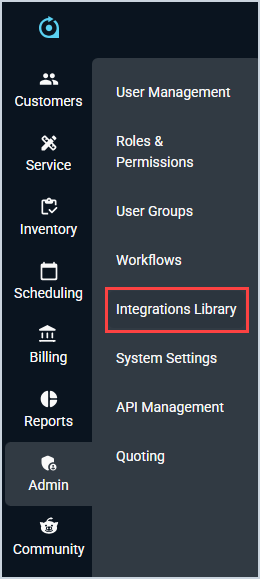
- Click Admin on the sidebar menu and select Integrations Library.
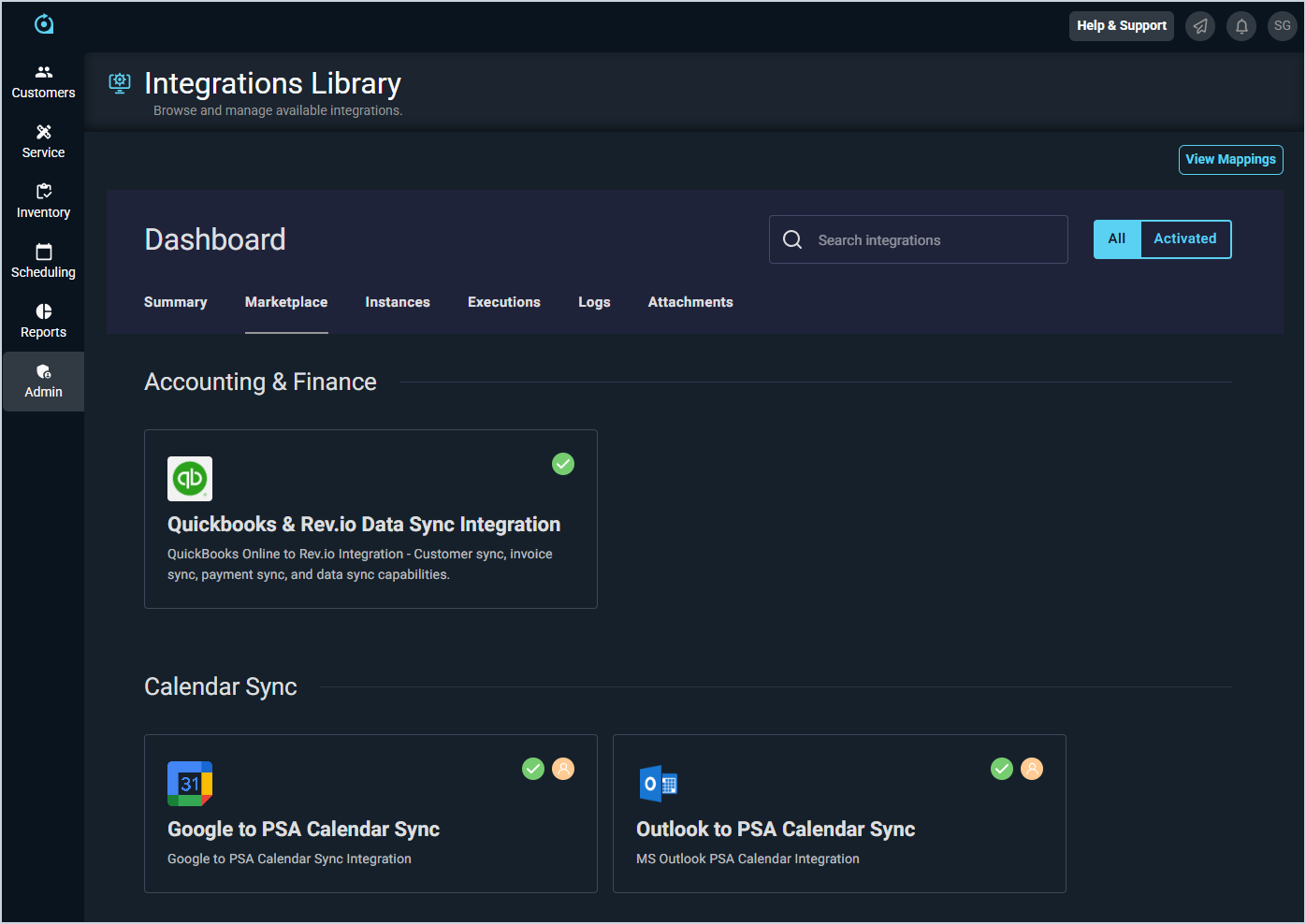
- Click the Marketplace tab.
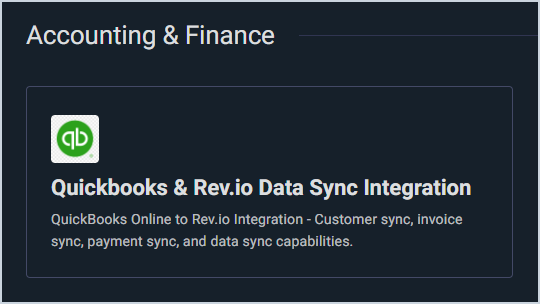
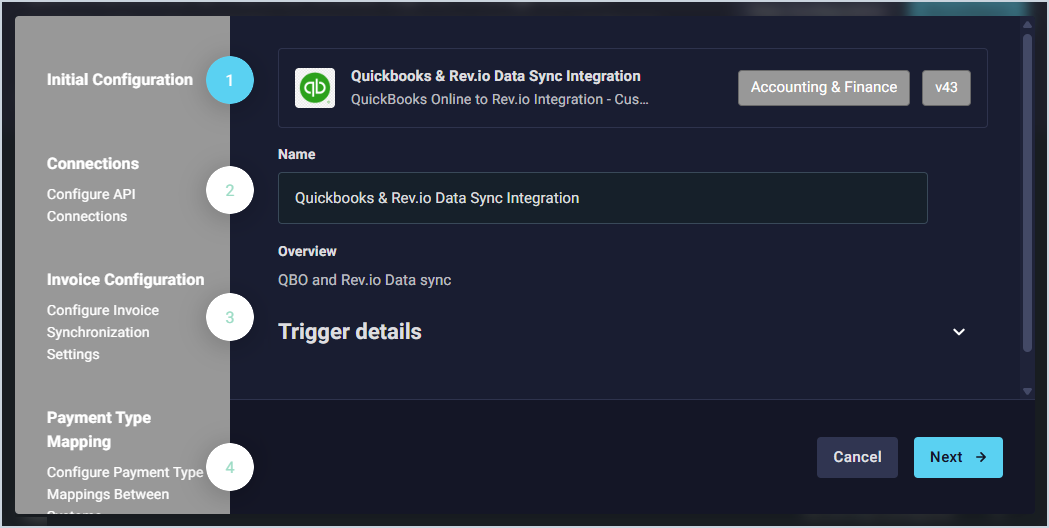
- Locate and select the QuickBooks & Rev.io Data Sync Integration in the Accounting & Finance section.
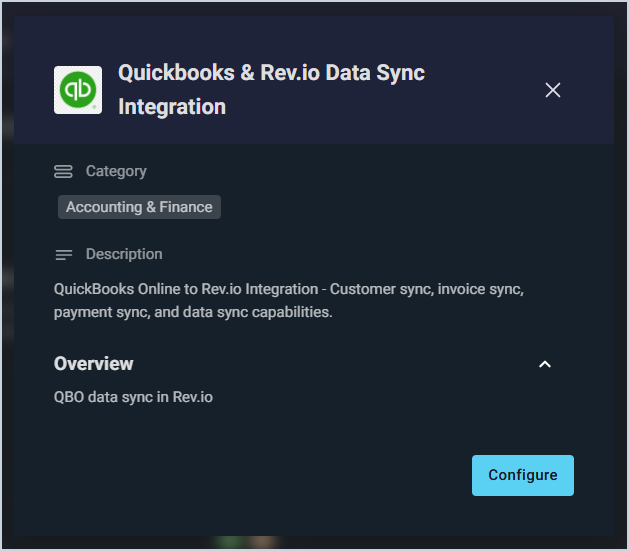
- Click the Configure button.
- The Initial Configuration section is automatically populated. Click the Next button.
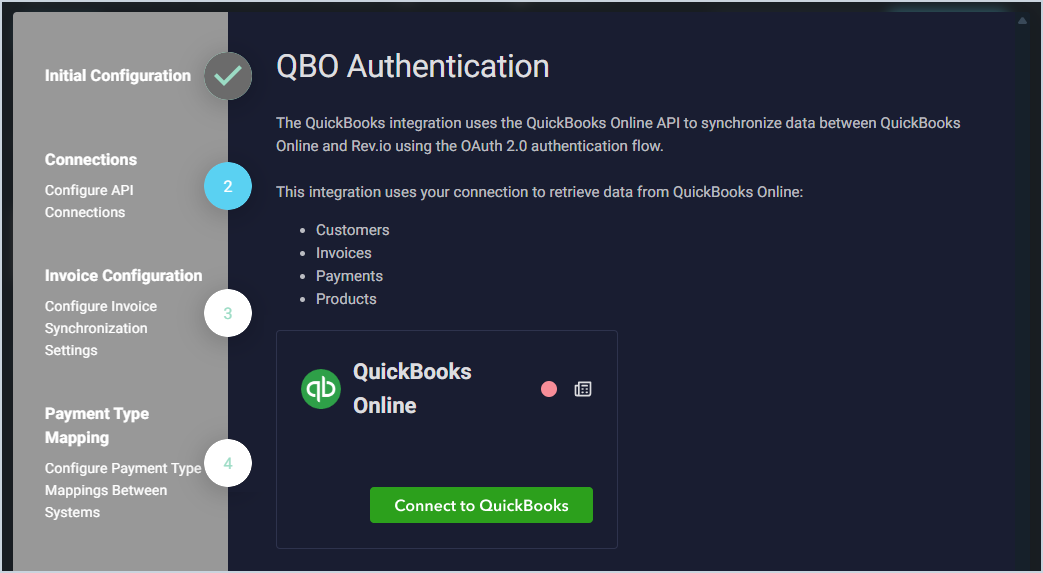
- Click Connect to QuickBooks. You will be redirected to QuickBooks to sign in with your credentials. Once authorization is complete, close the QuickBooks tab and return to Rev.io.
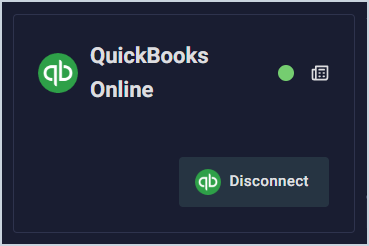
- If your connection was successful, the status circle in the QuickBooks Online section will be green. Click the Next button.
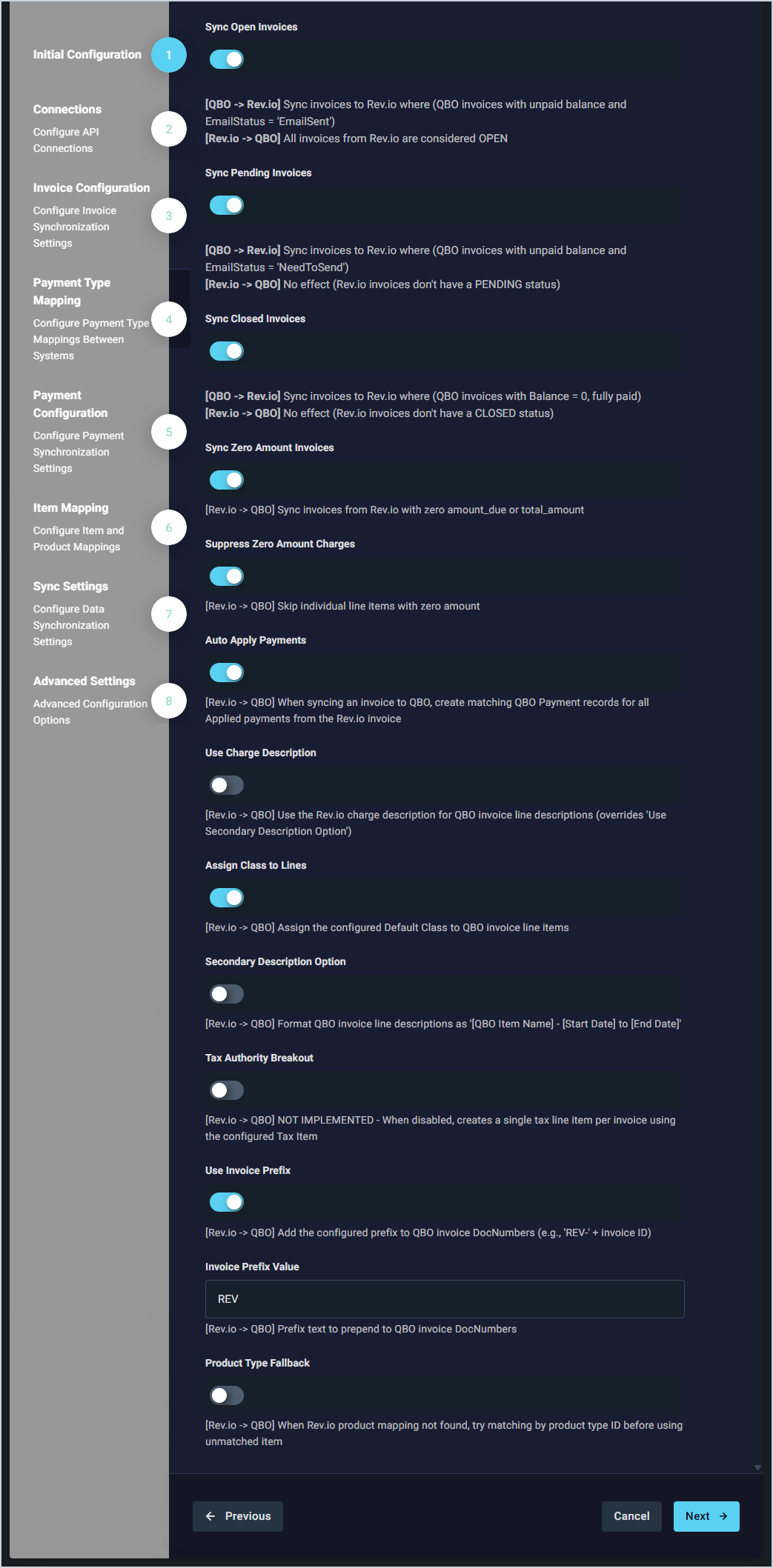
- Review the invoice configuration options and make any adjustments as needed. We strongly recommend keeping the Use Invoice Prefix option enabled to avoid confusion when syncing invoices. Click Next.
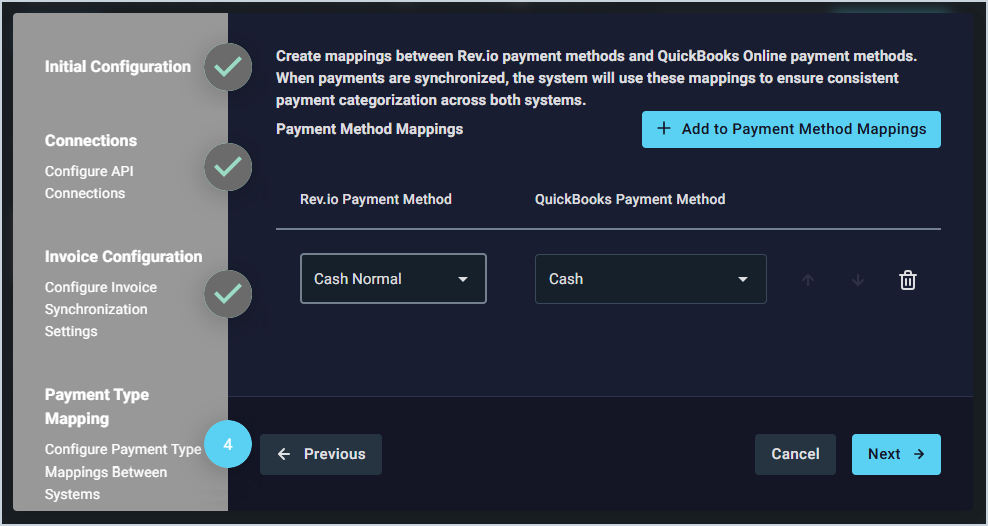
- Create mappings for your payment methods by selecting a Rev.io Payment Method and the corresponding QuickBooks Payment Method. Click Add to Payment Method Mappings to add additional mappings. Click Next.
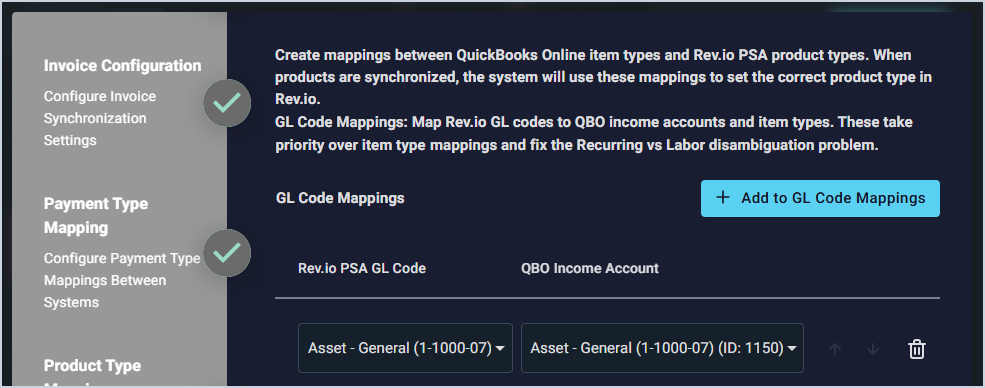
- Create mappings for your GL codes and income accounts by selecting a Rev.io GL Code and the corresponding QBO Income Account. Click Add to GL Code Mappings to add additional mappings. Click Next.
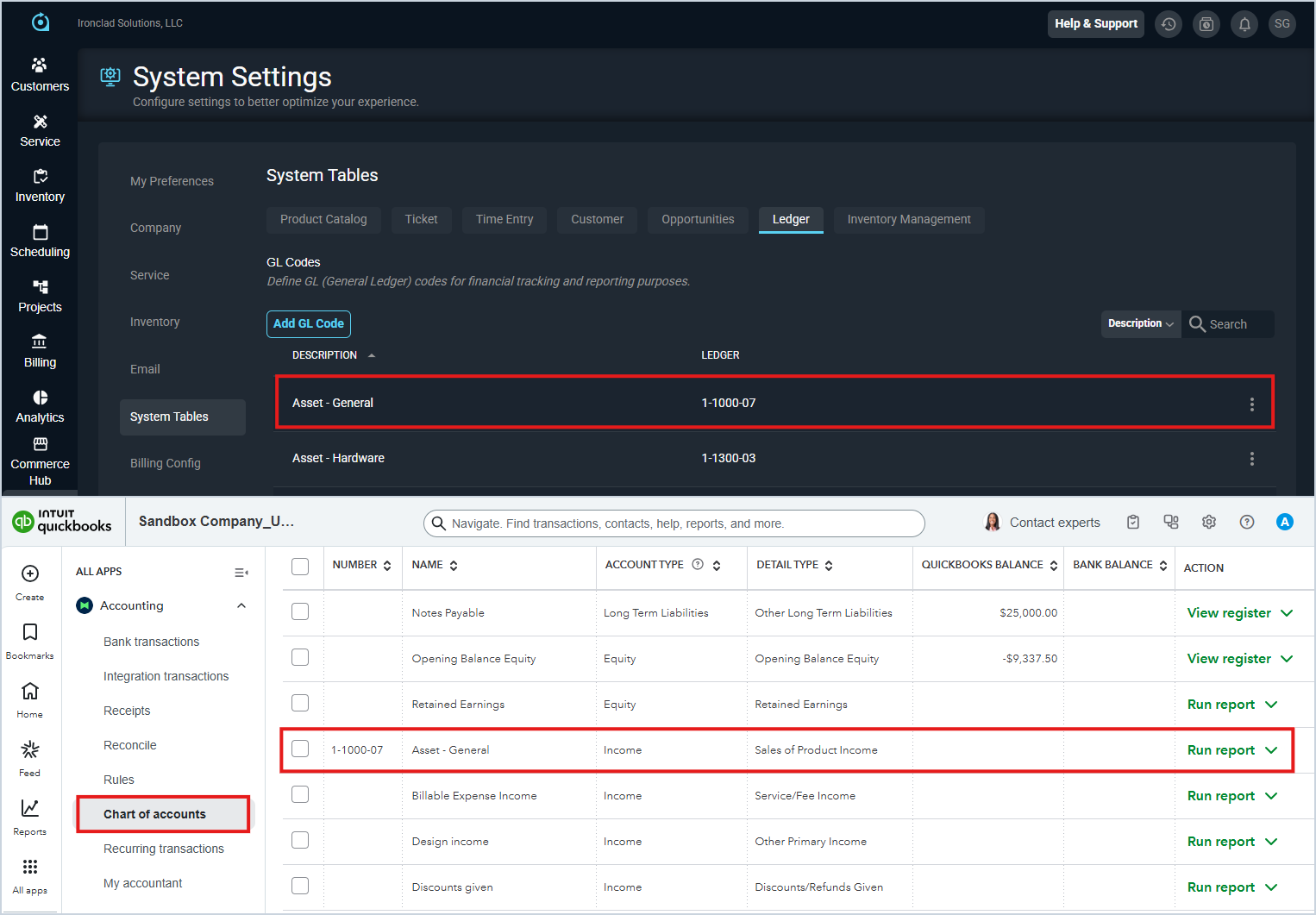
NOTE: See below for examples of GL Codes in Rev.io PSA and QuickBooks Online.
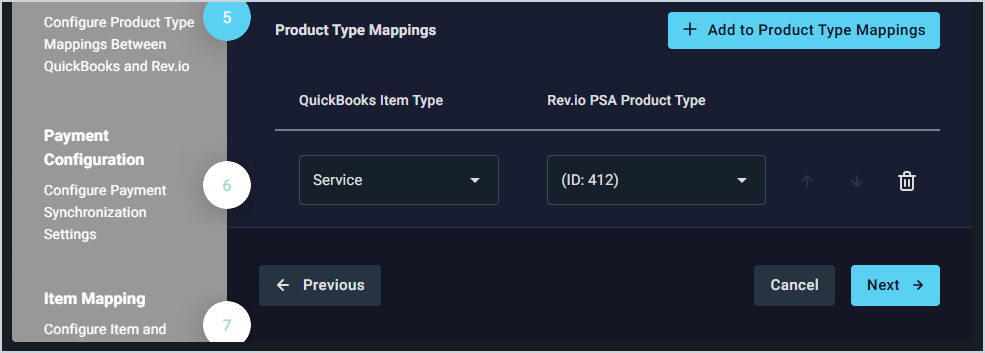
- Create mappings for your product types by selecting a QuickBooks Item Type and the corresponding Rev.io Product Type. Click Add to Product Type Mappings to add additional mappings. Click Next.
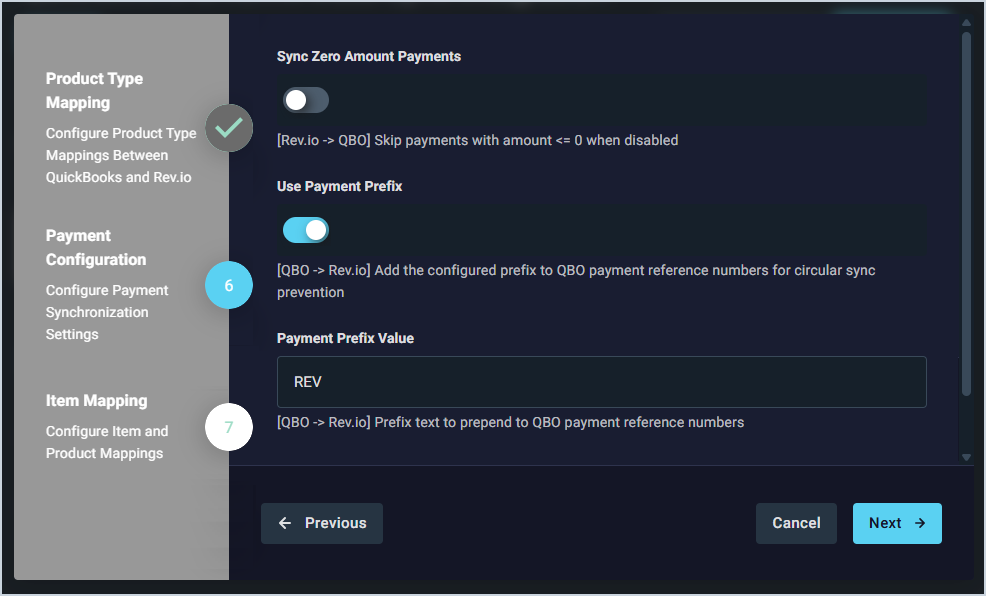
- Review the payment configuration options and make any adjustments as needed. We strongly recommend keeping the Use Payment Prefix option enabled to avoid confusion when syncing payments. Click Next.
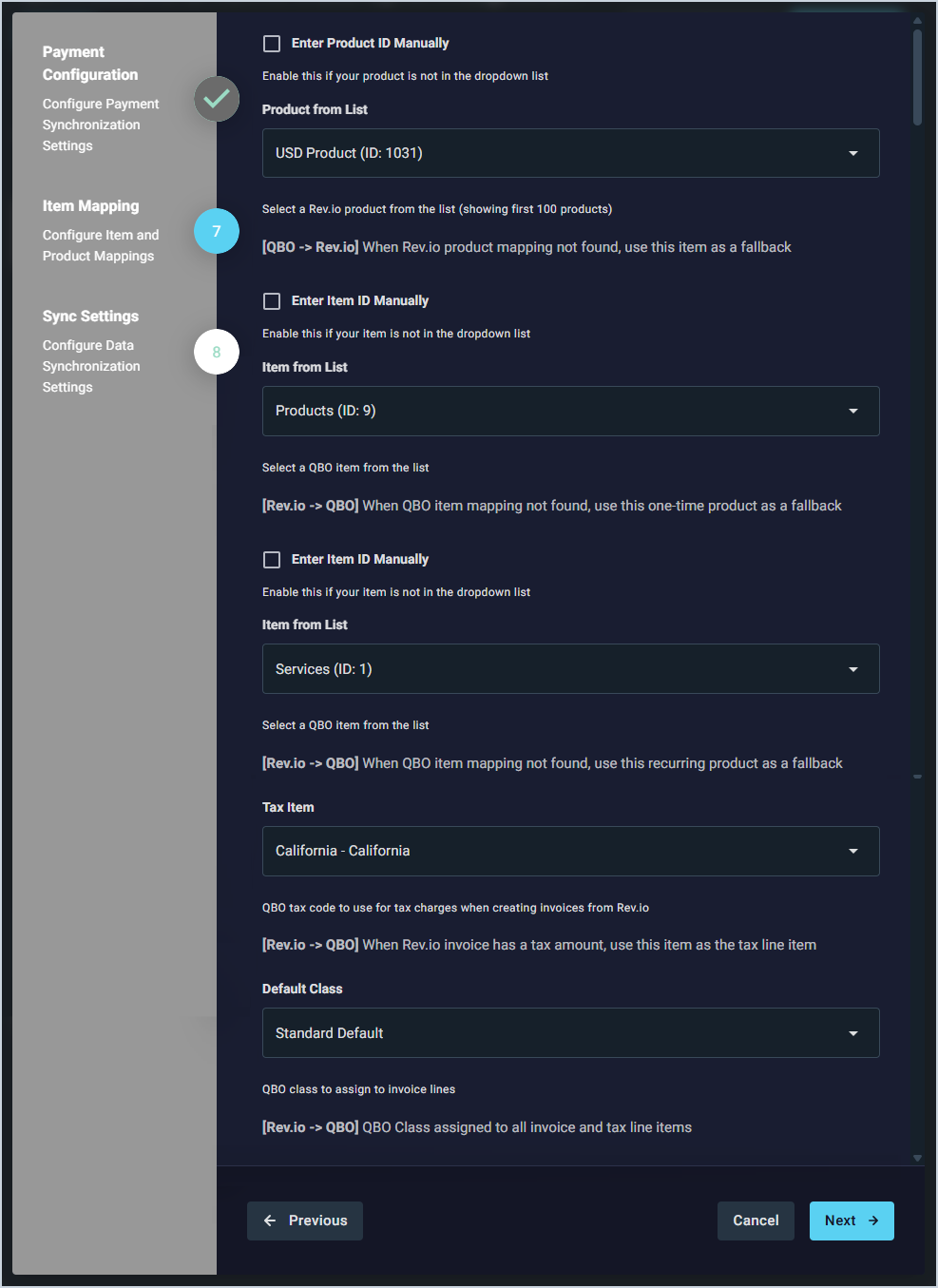
- Create mappings for unmatched items by selecting the appropriate options from the dropdowns for the following fields and click Next.
- Rev.io Product ID for unmatched items from QBO.
- QBO Item ID for unmatched one-time products from Rev.io.
- QBO Item ID for unmatched recurring products from Rev.io.
- QBO Tax Code to use when creating invoices from Rev.io.
- QBO Class to assign to invoice line items from Rev.io.
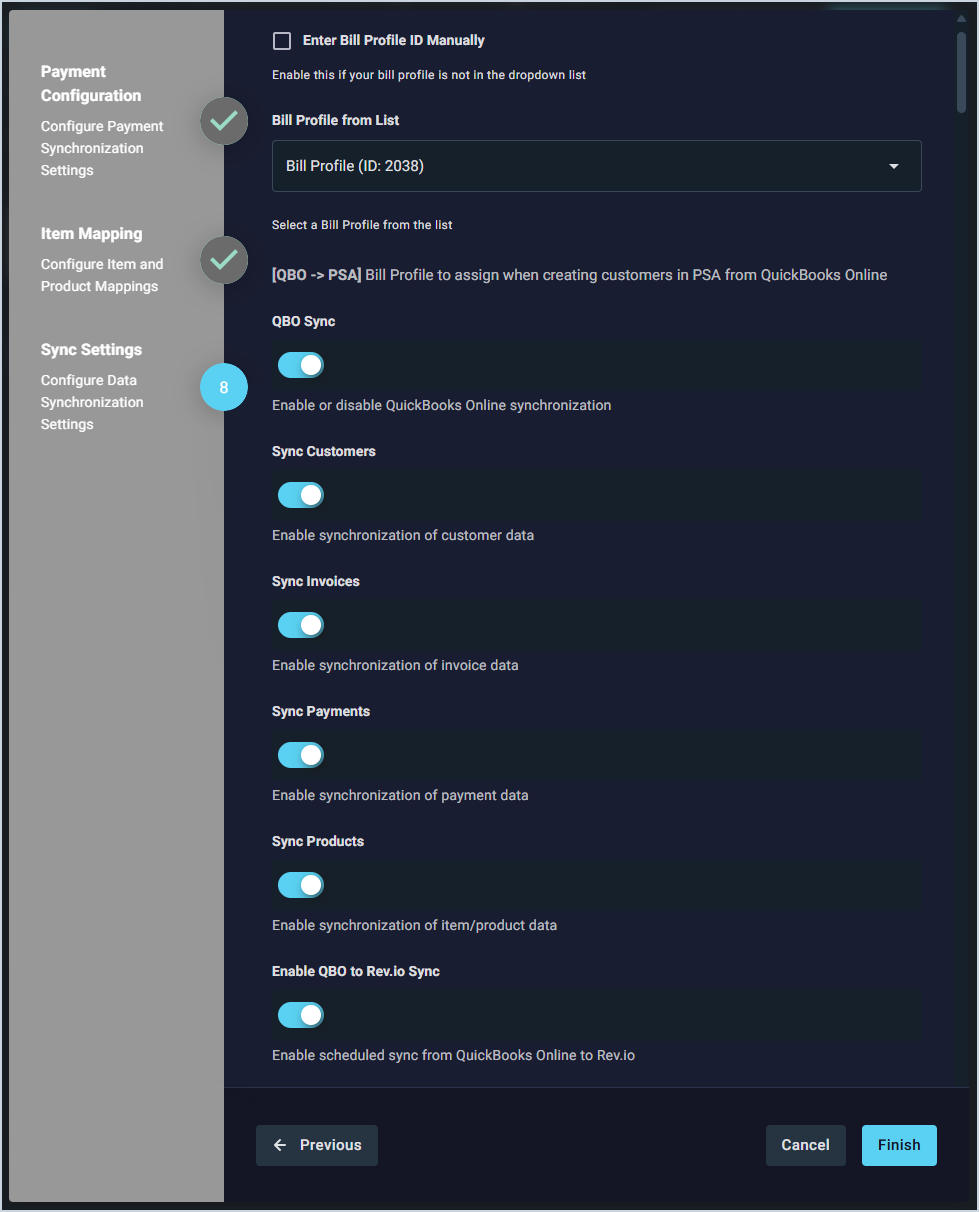
- Select a Bill Profile to assign to new customers created in Rev.io from QuickBooks Online. Review the remaining sync options, select your preferred Sync Direction, and click Finish.
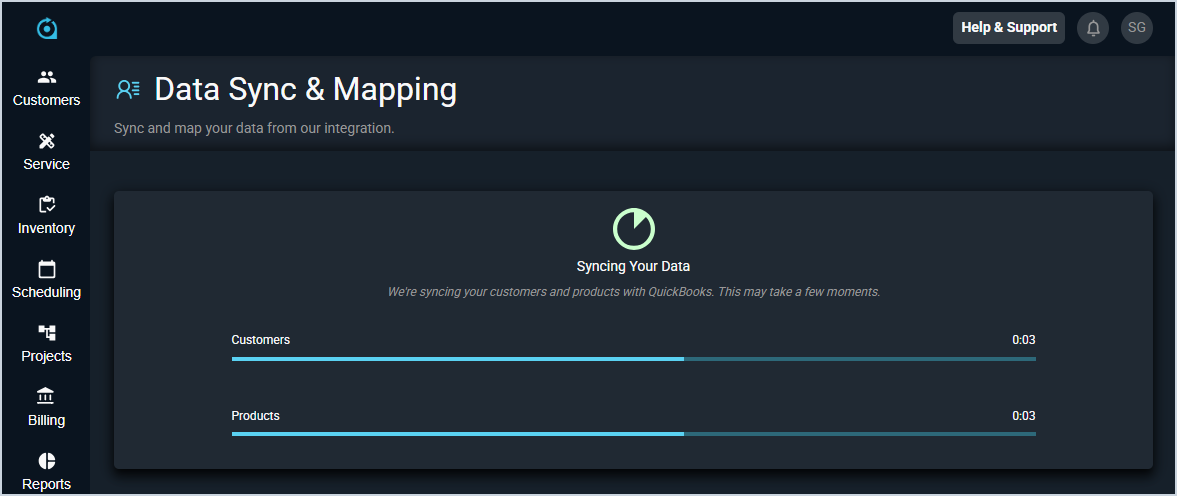
- The integration will run an initial sync of your customers and products. Do not leave this page while the sync is running. If you need to work in Rev.io during this time, open it in a separate tab. To review and manage customer and product mappings after setup, see the Integrations Library: Data Sync & Mapping article for more information.