
System Settings: System Tables - Ticket
The System Tables category on the System Settings screen allows you to configure various data points that can be selected using dropdown menus throughout your database. The Ticket tab specifically controls the values available in various dropdowns related to tickets throughout the system.
Status
The Status section allows you to define the ticket statuses available in your instance, including their display color and the state change that occurs when each status is applied to a ticket.
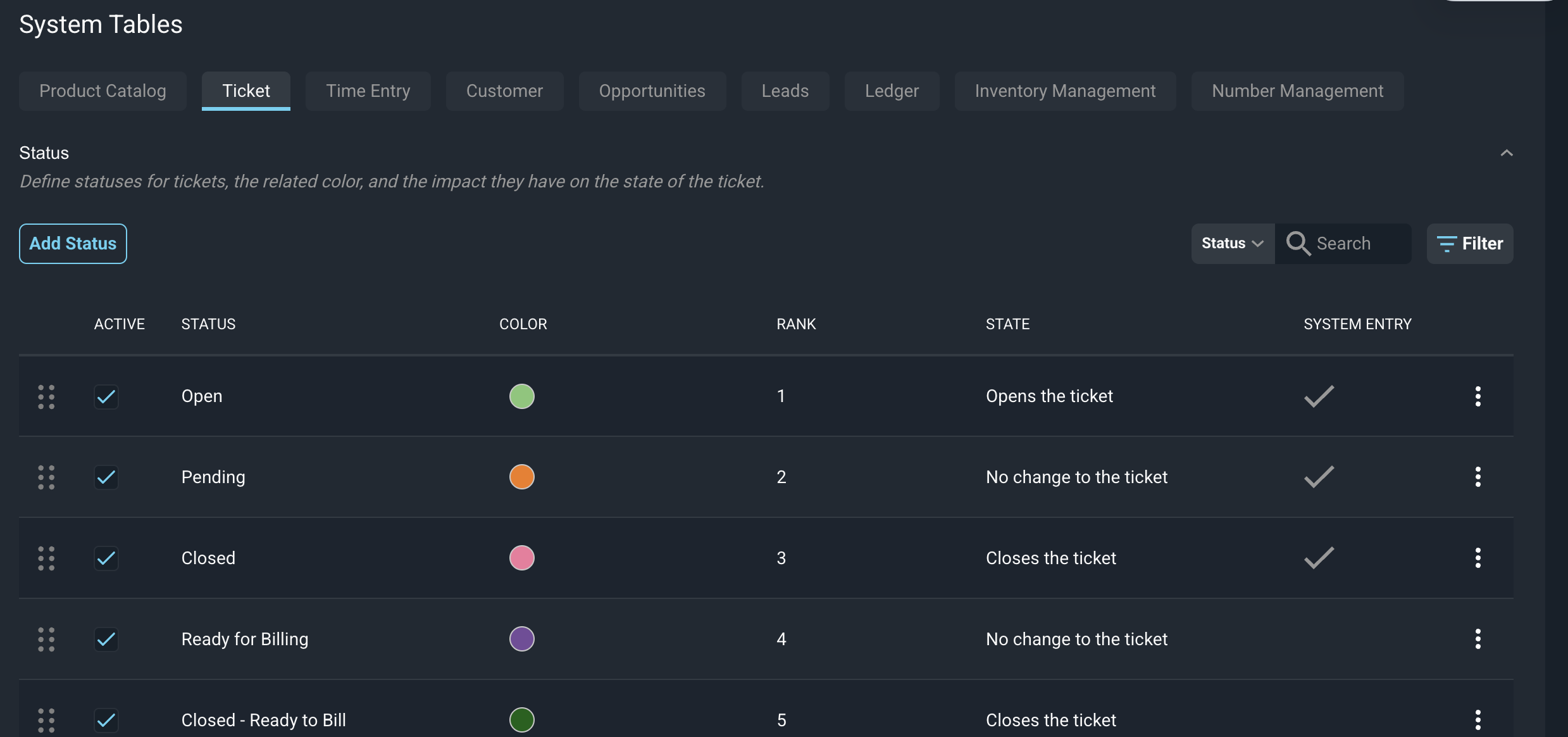
Each field in the Status section is defined below.
| Label | Definition |
| Active | A checkmark indicates that the status is active in your instance. |
| Status | Name of the status. |
| Color | Custom color selected for the status. |
| Rank | Order the status option displays in when using the Status dropdown on tickets. |
| State | Changes made to the ticket when the status is selected. |
| System Entry | A checkmark indicates that the status is a system entry and cannot be modified. |
Priority
The Priority section allows you to define the priority levels available on tickets, including their display color and the order in which they appear in the priority dropdown.
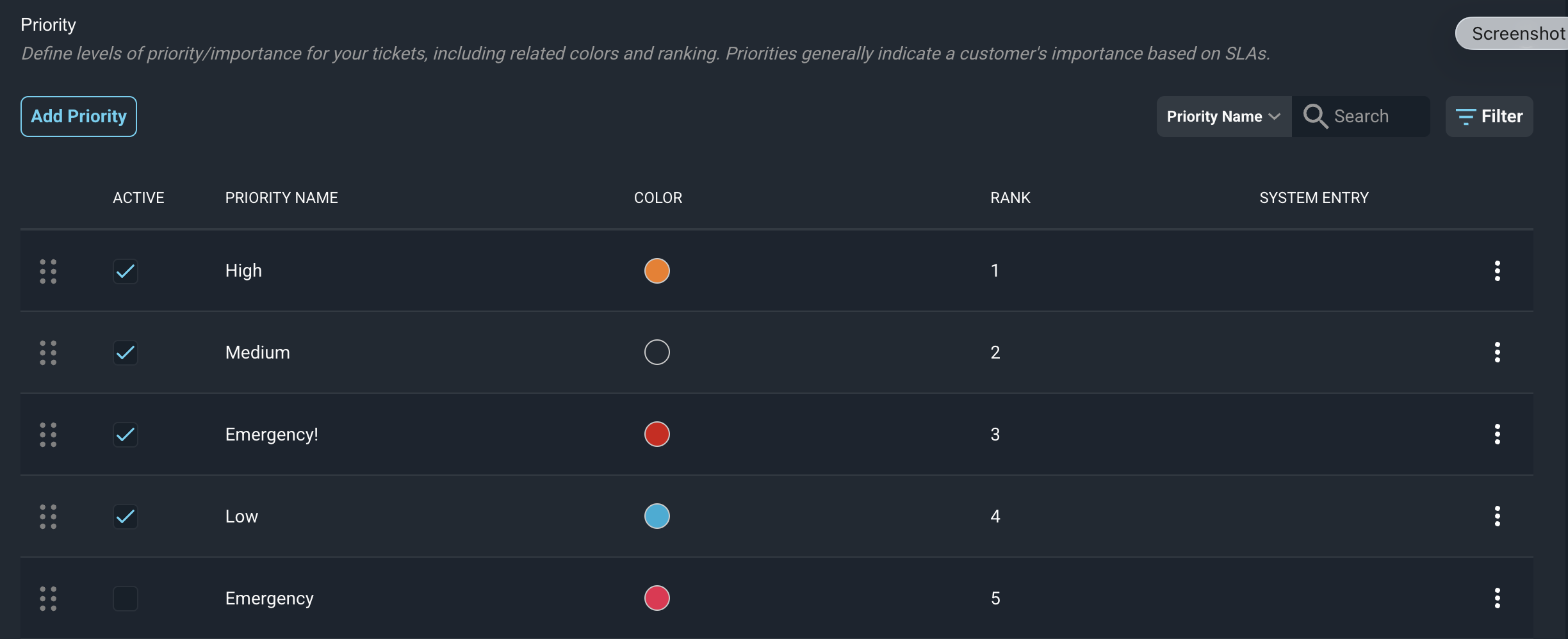
Each field in the Priority section is defined below.
| Label | Definition |
| Active | A checkmark indicates that the priority is active in your instance. |
| Priority Name | Name of the priority. |
| Color | Custom color selected for the priority. |
| Rank | Order the priority option displays in when using the Priority dropdown on tickets. NOTE: To reorder the line items, simply click and drag the items into the desired order using the drag icon at the start of the row. |
| System Entry | A checkmark indicates that the priority is a system entry and cannot be modified. |
Ticket Type
The Ticket Type section allows you to define the ticket types available in your instance and assign a default priority to each type.
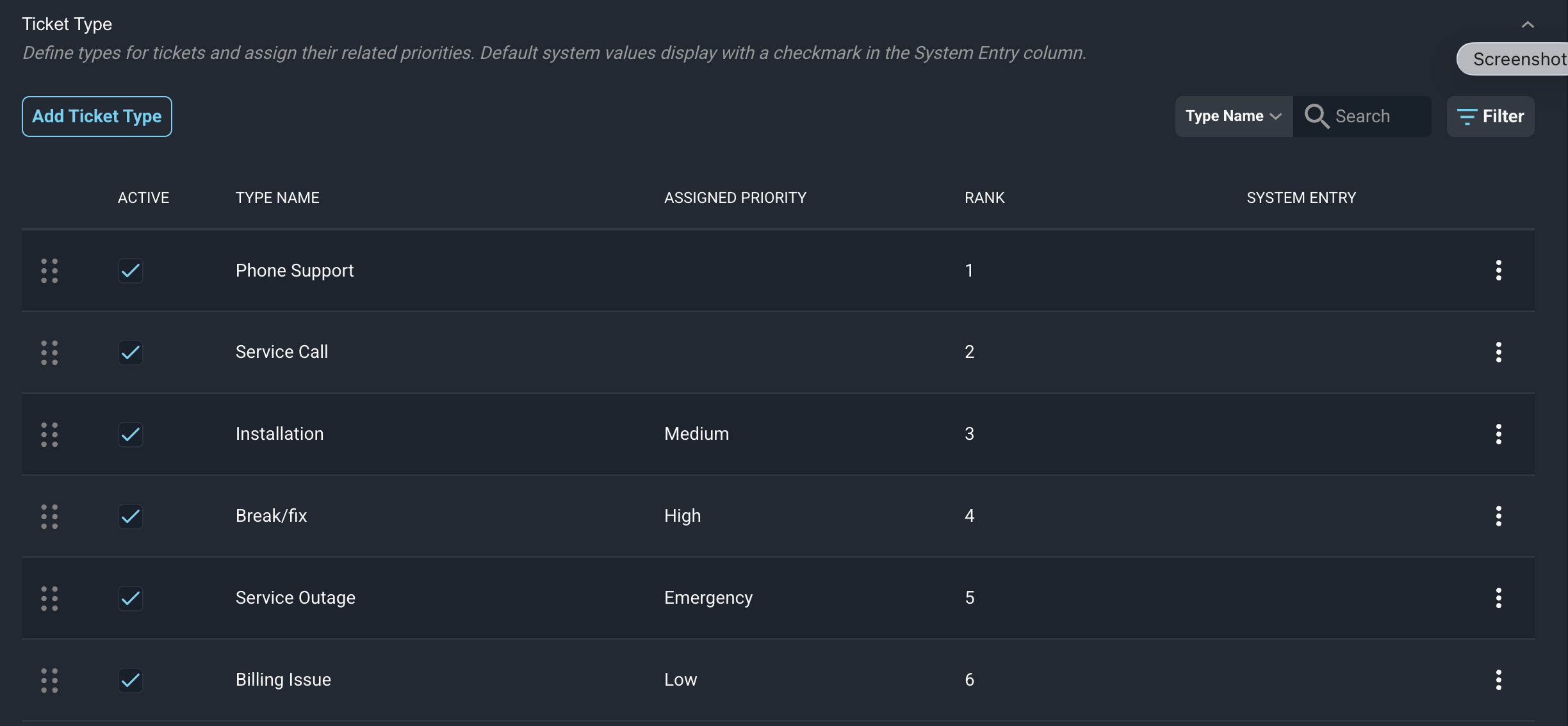
Each field in the Ticket Type section is defined below.
| Label | Definition |
| Active | A checkmark indicates that the type is active in your instance. |
| Type Name | Name of the ticket type. |
| Assigned Priority | Priority assigned to the ticket when the type is selected. |
| Rank | Order the ticket type displays in when using the Type dropdown on tickets. |
| System Entry | A checkmark indicates that the type is a system entry and cannot be modified. |
Ticket Subtype
The Ticket Subtype section allows you to define subtypes for each ticket type. Select a ticket type from the Ticket Type dropdown to view and manage its subtypes. Default system values display with a checkmark in the System Entry column.
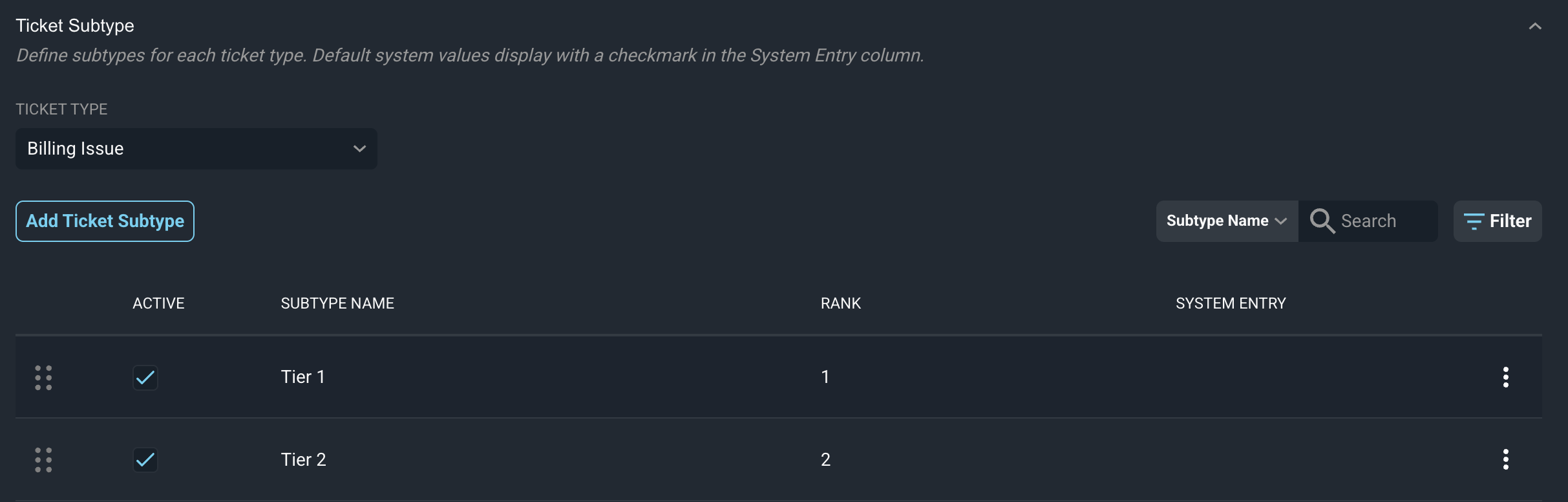
Each field in the Ticket Subtype section is defined below.
| Label | Definition |
| Ticket Type | Select the ticket type whose subtypes you want to view and manage. |
| Active | A checkmark indicates that the subtype is active in your instance. |
| Subtype Name | Name of the ticket subtype. |
| Rank | Order the subtype displays in for its ticket type. |
| System Entry | A checkmark indicates that the subtype is a system entry and cannot be modified. |
These actions are available in the Ticket Subtype section.
- Add a subtype by selecting a ticket type from the Ticket Type dropdown and clicking the Add Ticket Subtype button.
- Search the subtypes by selecting a column from the dropdown next to the Search box (set to Subtype Name by default) and entering text.
- Filter the subtypes displayed by clicking the Filter button.
Severity
The Severity section allows you to define the severity levels available on tickets, including their display color and the order in which they appear in the severity dropdown.
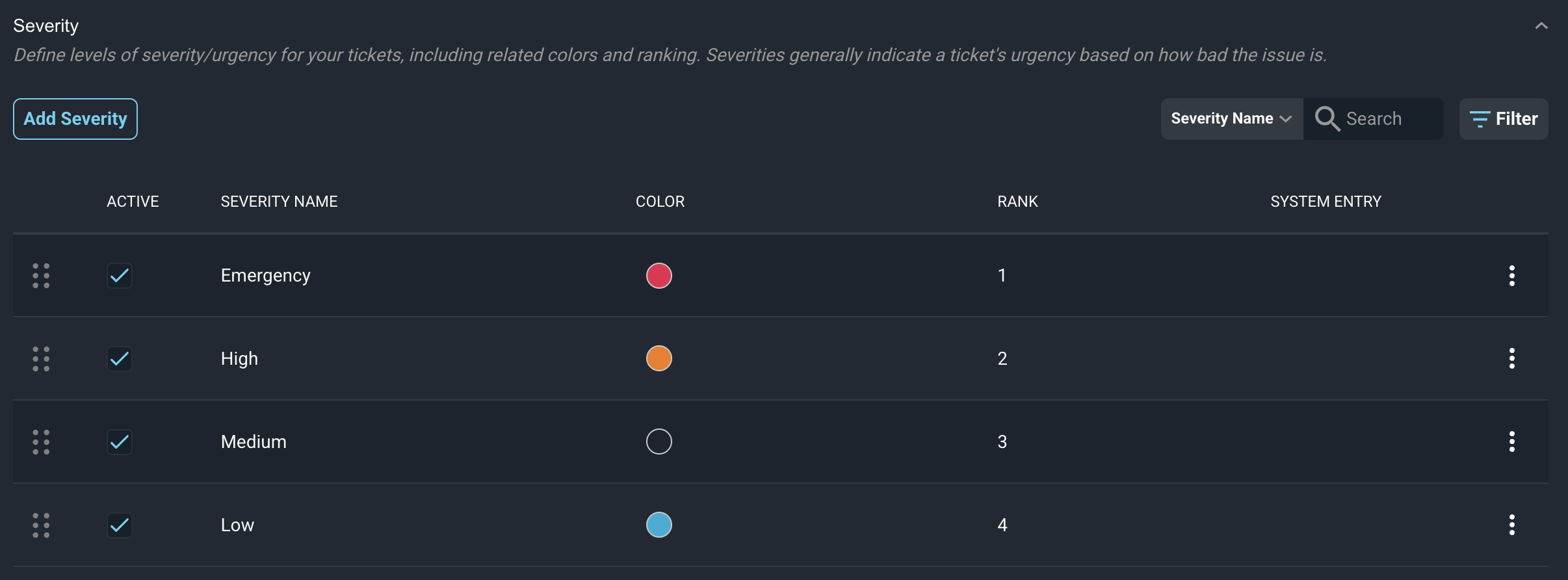
Each field in the Severity section is defined below.
| Label | Definition |
| Active | A checkmark indicates that the severity is active in your instance. |
| Severity Name | Name of the severity. |
| Color | Custom color selected for the severity. |
| Rank | Order the severity option displays in when using the Severity dropdown on tickets. NOTE: To reorder the line items, simply click and drag the items into the desired order using the drag icon at the start of the row. |
| System Entry | A checkmark indicates that the severity is a system entry and cannot be modified. |
Resolution Codes
The Resolution Codes section allows you to define the standardized reasons that can be selected when closing a ticket, such as Fixed.
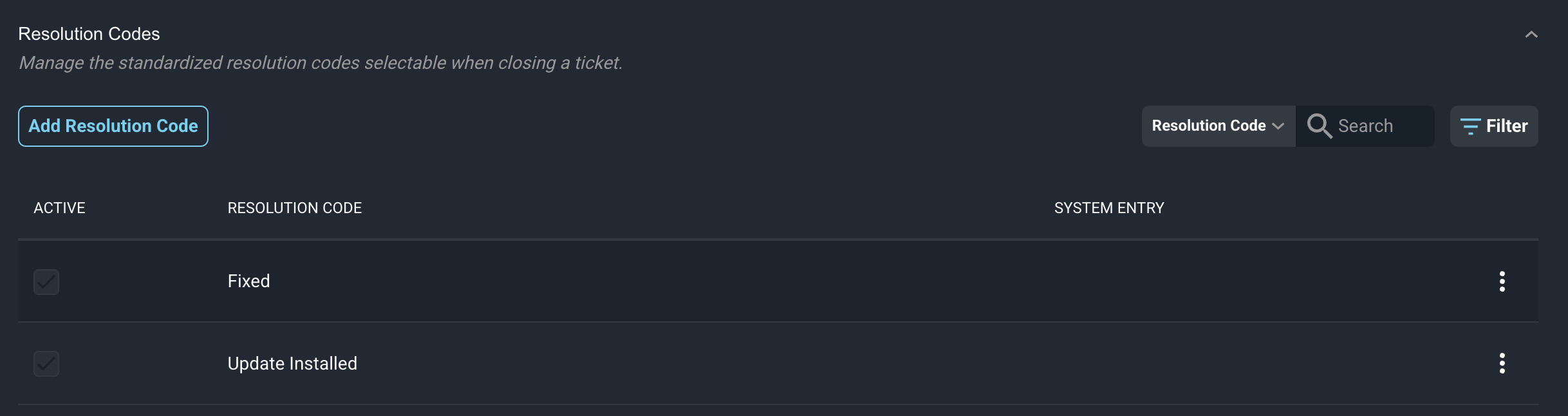
Each field in the Resolution Codes section is defined below.
| Label | Definition |
| Active | A checkmark indicates that the resolution code is active and available to select when closing a ticket. Codes that are not active do not appear in the Resolution Code dropdown. |
| Resolution Code | Name of the resolution code. |
| System Entry | Indicates that this resolution code was inserted as a required value in the software. |
These actions are available in the Resolution Codes section.
- Add a new resolution code by clicking the Add Resolution Code button, entering a name in the new row, and clicking Save. The Active box is checked by default. Click Cancel to discard the new row.
- Search the codes by selecting a column from the dropdown next to the Search box (set to Resolution Code by default) and entering text.
- Filter the codes displayed by clicking the Filter button.
- Edit or delete a code by clicking the three-dot menu at the end of its row and selecting the desired option.
See the Closing a Ticket with a Resolution article for more information about how resolutions are entered when closing a ticket.
Resolution Rules
The Resolution Rules section allows you to require a resolution before a ticket can be closed, based on the ticket type. Ticket types that do not require a resolution can still be closed without one.
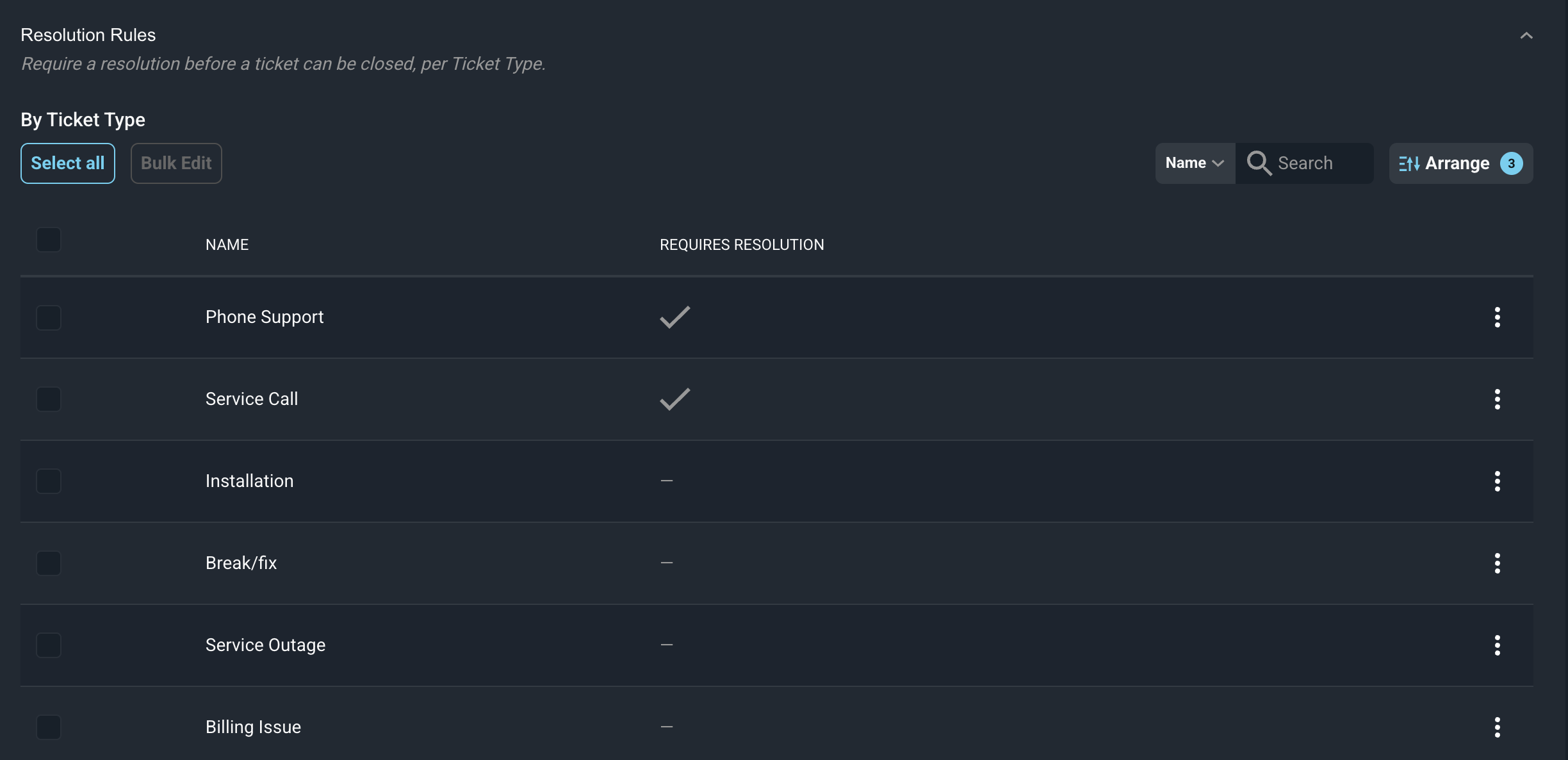
Each column in the Resolution Rules section is defined below.
| Label | Definition |
| Name | Name of the ticket type. |
| Requires Resolution | A checkmark indicates that a resolution summary and Resolution Code must be entered before tickets of this type can be closed. A dash indicates that a resolution is not required. |
These actions are available in the Resolution Rules section.
- Require a resolution for a ticket type by clicking the three-dot menu at the end of its row, selecting Edit, turning on the Requires Resolution toggle, and clicking Save. Click Cancel to discard your change.
- Update several ticket types at once by selecting their checkboxes (or clicking Select all) and clicking the Bulk Edit button.
- Search the ticket types by selecting a column from the dropdown next to the Search box (set to Name by default) and entering text.
- Customize the columns displayed by clicking the Arrange button.
| NOTE: Changes in this section save per row, so click Save on each ticket type you edit. |
See the Closing a Ticket with a Resolution article for more information about how resolutions are entered when closing a ticket.
Ticket Tags
The Tags section allows you to define custom tags for tickets, including their display labels, colors, and usage settings. Tags can be applied to tickets to help categorize and identify them at a glance.
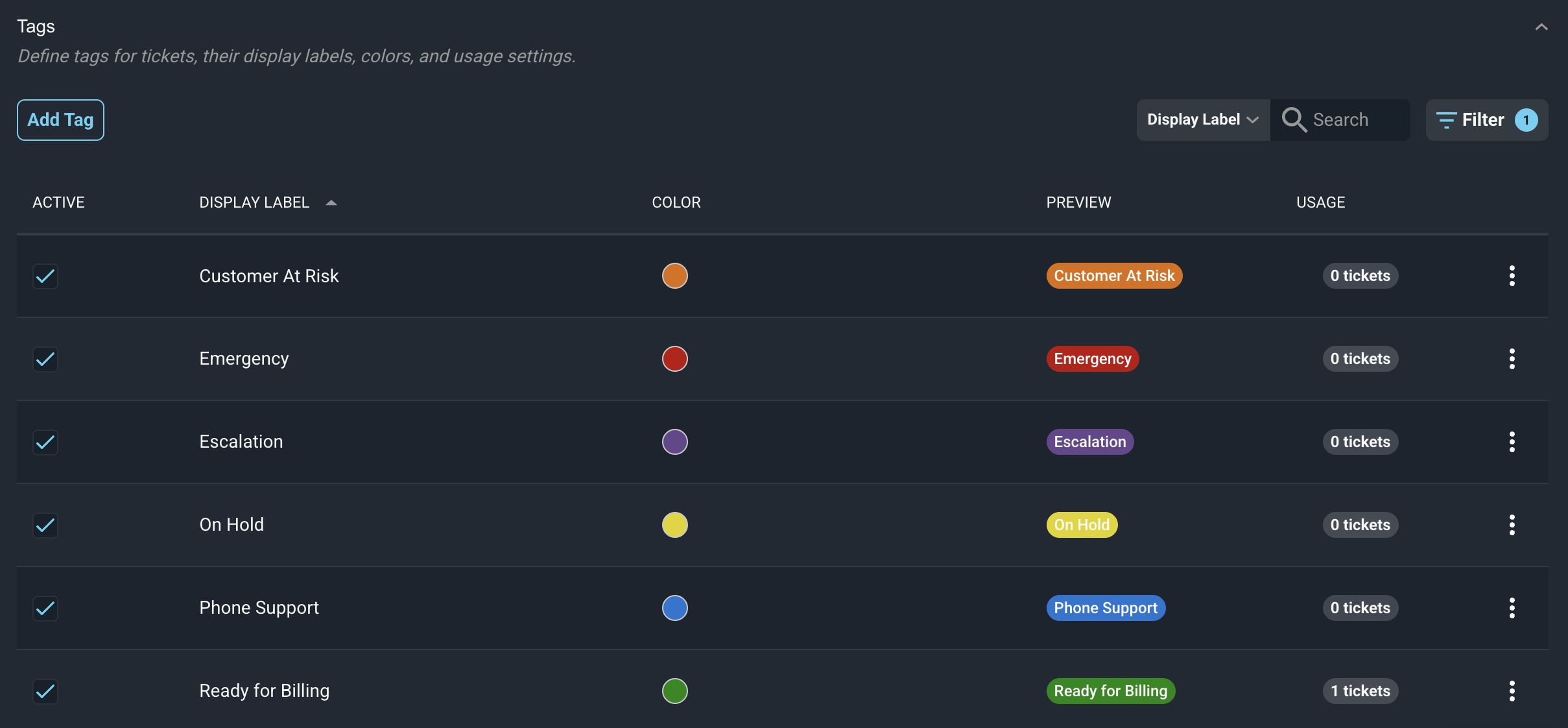
Each field in the Tags section is defined below.
| Label | Definition |
| Active | A checkmark indicates that the tag is active in your instance. |
| Display Label | Name of the tag as it will appear on tickets. |
| Color | Custom color selected for the tag. |
| Preview | A visual preview of how the tag will appear when applied to a ticket. |
| Usage | The number of tickets the tag is currently applied to. |
Available Actions
These actions are available on the Ticket tab.
- Enter new items by clicking the Add button in each section, completing the desired fields, and clicking the Save button.
- For sections with the drag icons at the start of each row, reorder the line items by simply clicking and dragging the items into the desired order using the drag icons.
- Edit line items by clicking the ellipsis at the end of the row and selecting Edit from the menu options. Click the Save button at the bottom of the screen once you have finished making changes.
- Delete line items by clicking the ellipsis at the end of the row and selecting Delete from the menu options. NOTE: You cannot delete items if they have been used in your instance. For example, once a ticket is set to a certain ticket type, that ticket type can no longer be deleted.
- See the System Settings Overview article for more information about the other categories on the System Settings screen.